
Choosing the Right Plywood Waterproof for Homes
Choosing the right plywood for your home projects can be overwhelming, especially when considering the various waterproof options available in the Indian market.
From kitchen cabinets to bathroom vanities, the potential for moisture exposure is high.
Selecting the correct plywood waterproof grade is crucial to ensure the longevity and durability of your furniture and fixtures.
This article provides a comprehensive guide to help you understand the different types of waterproof plywood, their ideal applications, and how to make an informed decision for your specific needs.
Understanding the distinctions between plywood grades will help you avoid costly mistakes and ensure your investments withstand the test of time and the Indian climate. We’ll explore the key characteristics of each type, focusing on their resistance to moisture, strength, and suitability for various applications.
What Makes Plywood Waterproof?
The term “waterproof” when applied to plywood can be a bit misleading. While no plywood is entirely impervious to water, certain types are designed to withstand moisture exposure better than others. The key factors that determine a plywood’s water resistance include the type of adhesive used, the quality of the wood veneers, and the manufacturing process.
The Role of Adhesive in Plywood Waterproofing
The adhesive used to bond the wood veneers together is critical for determining a plywood’s water resistance. Phenol formaldehyde resin adhesives are commonly used in waterproof plywood. These adhesives are highly resistant to water, humidity, and even boiling water, making them ideal for applications exposed to moisture.
Veneer Quality and Core Composition
The quality of the wood veneers and the core composition also play a significant role. Higher-grade veneers with fewer voids and defects result in a stronger, more durable plywood sheet. The core can be made of solid wood or composed of veneers, which can impact the overall strength and water resistance.
Understanding the Manufacturing Process
The plywood manufacturing process itself is crucial. This includes the application of adhesive, the pressing process, and the overall quality control. Consistent pressure and proper curing times are essential to ensure a strong bond and prevent delamination, which is the separation of the plywood layers, especially in wet conditions.
Are you unsure which plywood specifications are best for your project?
Key Types of Plywood Waterproof Available in India
Several types of waterproof plywood are available in India, each with its own set of characteristics and applications. Understanding the differences between these types is essential for making the right choice for your project.
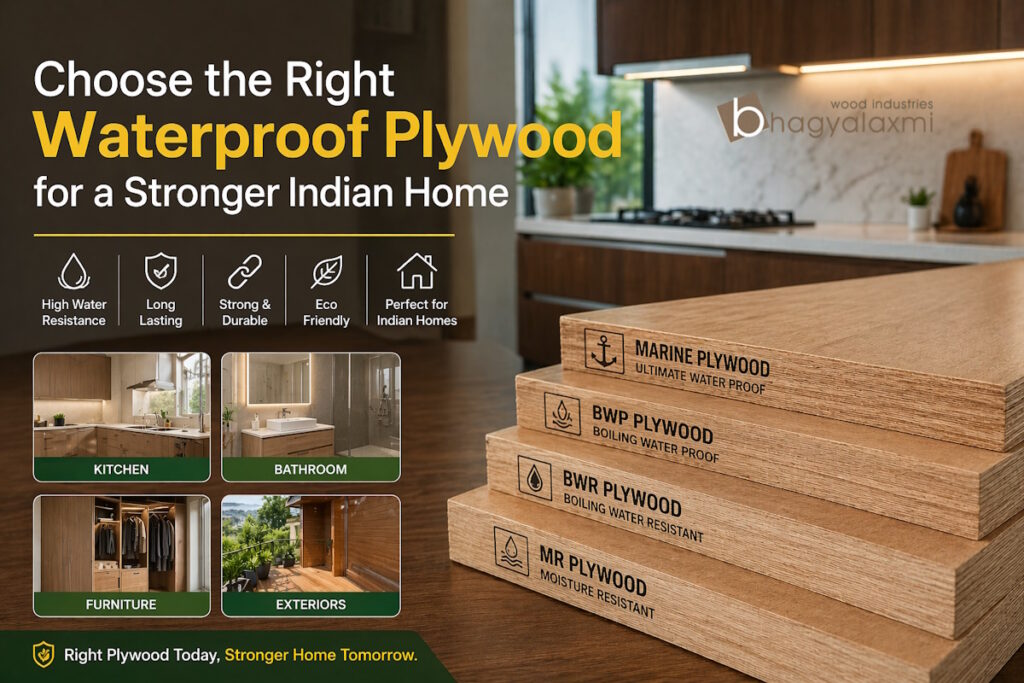
1. Commercial Plywood (MR Grade)
Commercial plywood, often referred to as MR (Moisture Resistant) grade, is suitable for interior applications where moisture exposure is minimal. While it’s not truly waterproof, it can withstand a certain level of humidity. This type of plywood is generally more affordable than other waterproof grades, making it a popular choice for furniture and interior projects.
2. Boiling Water Resistant (BWR) Plywood
BWR (Boiling Water Resistant) plywood is designed to withstand exposure to moisture and humidity. It is bonded with a synthetic resin adhesive that makes it resistant to water. BWR plywood is suitable for use in kitchens and bathrooms, where the risk of moisture exposure is higher.
3. Boiling Water Proof (BWP) Plywood
BWP (Boiling Water Proof) plywood is the highest grade of waterproof plywood available. It is manufactured with phenolic resins that are completely waterproof. BWP plywood is ideal for exterior applications and areas with high moisture exposure, such as kitchen cabinets, bathroom vanities, and even boat building. BWP plywood meets stringent ISI standards and is a reliable choice for long-term durability.
4. Marine Plywood
Marine plywood is specifically designed for marine applications and is the most water-resistant type available. It is manufactured with waterproof glue and high-quality veneers that are resistant to delamination. Marine plywood is ideal for boat building and other applications exposed to constant moisture and water.
Comparing Plywood Waterproof Grades: Which One Is Best for You?
Choosing the right waterproof plywood depends on your specific needs and the environment where it will be used. Consider the following factors when making your decision:
Application and Exposure to Moisture
The level of moisture exposure is a critical factor. For interior applications with minimal moisture, MR grade plywood may suffice. For kitchens and bathrooms, BWR or BWP plywood is recommended. For exterior applications or marine environments, BWP or marine plywood is the best choice.
Durability and Lifespan
The lifespan of the plywood depends on the quality of the materials and the manufacturing process. BWP and marine plywood are generally more durable and have a longer lifespan than MR or BWR plywood.
Cost Considerations
The cost of plywood varies depending on the grade and quality. MR grade plywood is the most affordable, followed by BWR, BWP, and marine plywood. Consider your budget and the importance of durability when making your decision.
ISI Standards and Certifications
Always look for ISI certification, as this ensures that the plywood meets Indian standards for quality and performance. Certified plywood provides assurance that the product is manufactured to the required standards and is suitable for its intended application.
Need help in selecting the right plywood?
Avoiding Common Mistakes When Choosing Plywood Waterproof
Selecting the wrong plywood can lead to costly repairs and premature failure. Here are some common mistakes to avoid:
Ignoring the Application
Using the wrong grade of plywood for your application is a common mistake. For example, using MR grade plywood in a bathroom can lead to swelling and damage.
Neglecting ISI Certification
Failing to check for ISI certification is another mistake. It is important to verify that the plywood meets the required standards.
Focusing Only on Price
Choosing the cheapest option without considering the quality and durability can be a false economy. Investing in higher-quality plywood can save you money in the long run.
Not Considering Environmental Conditions
Ignoring the environmental conditions, such as humidity and exposure to the elements, can lead to the premature failure of the plywood.
The Best Plywood Waterproof for Your Project: A Summary
In summary, the choice of plywood waterproof depends on your specific needs and the environment where it will be used. Consider the following recommendations:
For interior applications with minimal moisture exposure, MR grade plywood is a cost-effective option. For kitchens and bathrooms, BWR or BWP plywood is recommended. For exterior applications or marine environments, BWP or marine plywood is the best choice. Always look for ISI certification to ensure quality and performance.
Are you looking for factory-direct prices on plywood?