
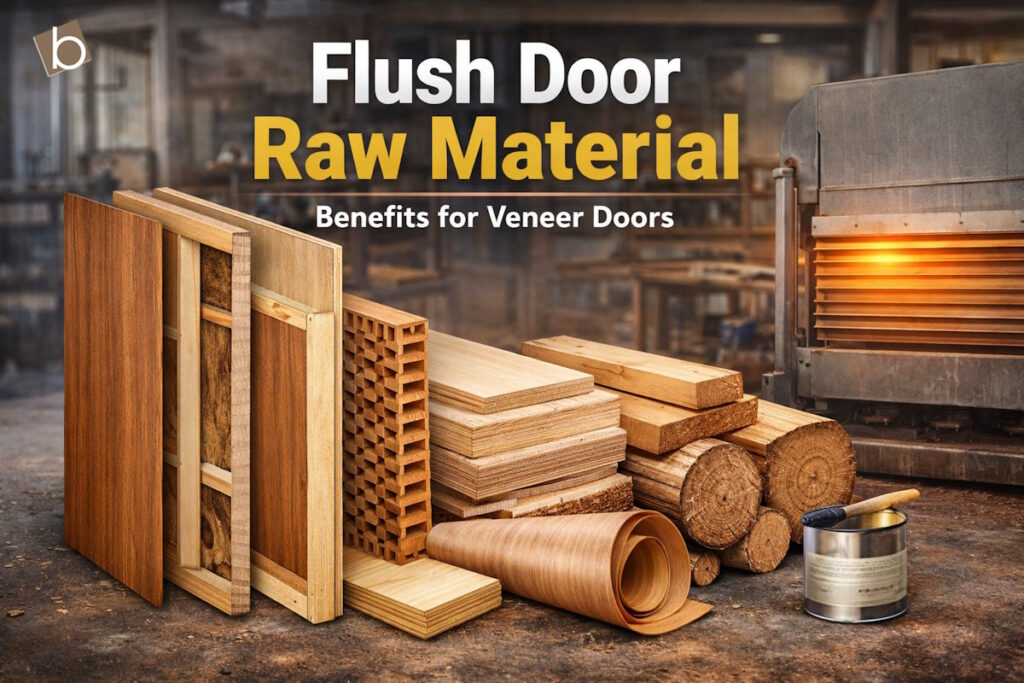
Choosing the right doors is a significant decision in any construction or renovation project.
While aesthetics play a vital role, the structural integrity and long-term performance of your doors are equally crucial.
This is particularly true when it comes to flush doors, which offer a clean, modern look and are a popular choice for both residential and commercial applications across India.
However, to truly appreciate the value of flush doors, it’s essential to look beyond the surface and understand the importance of the raw materials used in their construction. In this article, we’ll delve into the structural benefits of flush door raw material, and how they contribute to the durability and performance of your doors.
Understanding the components of a flush door, including its core and facing materials, can significantly impact your project. This guide will help you navigate the various options and make informed decisions. We’ll explore the advantages of flush doors, focusing on how the right raw materials and manufacturing processes, like the hot press technique, contribute to their overall quality. This knowledge will empower you to choose flush doors that not only look great but also stand the test of time, ensuring lasting value for your investment.
Looking for durable and stylish flush doors?
The Core of the Matter: Understanding Flush Door Construction
The core of a flush door is the foundation of its strength and stability. The raw material used for the core significantly impacts the door’s resistance to warping, bending, and other forms of damage.
Core Materials and Their Impact
Different core materials offer varying levels of performance. Solid cores, typically made from timber or composite wood, provide the highest level of strength and sound insulation. Hollow core doors, on the other hand, are lighter and more economical, but they offer less resistance to impact and sound transmission. The selection of the core material should align with the specific requirements of the application. For instance, high-traffic areas or areas requiring enhanced privacy would benefit from solid core flush doors.
The Role of Stiles and Rails
In addition to the core, the stiles (vertical edges) and rails (horizontal edges) play a crucial role in the structural integrity of a flush door. These components, often made from solid wood or engineered wood, provide a frame that adds rigidity and helps the door maintain its shape over time. The quality of the stiles and rails is particularly important in ensuring the door’s ability to withstand the stresses of everyday use, such as repeated opening and closing.
How the Core Affects Long-Term Performance
The choice of core material directly affects the long-term performance and lifespan of a flush door. A well-constructed core resists warping, shrinking, and swelling, ensuring the door maintains its shape and functionality over many years. This is especially important in the Indian climate, where doors are subjected to fluctuations in temperature and humidity. A robust core ensures that the door remains stable, preventing issues like sticking or difficulty in closing.
Advantages of Flush Doors: More Than Meets the Eye
Flush doors offer several advantages that make them a popular choice for various applications. Beyond their sleek and minimalist appearance, these doors offer structural benefits and practical advantages that contribute to their overall appeal.
Enhanced Durability and Strength
Flush doors are engineered for durability, particularly when constructed with quality raw materials. The solid construction and robust core provide excellent resistance to wear and tear. This makes them ideal for high-traffic areas where doors are subjected to frequent use. In addition, the flush design eliminates crevices where dirt and moisture can accumulate, making them easier to clean and maintain, contributing to their long-term durability.
Versatility in Design and Application
Flush doors are exceptionally versatile, making them suitable for a wide range of applications, from residential homes to commercial buildings. Their clean lines and simple design complement various interior styles, from modern to traditional. The smooth surface of a flush door provides an excellent canvas for custom finishes, including veneers, paints, and laminates, allowing for complete design flexibility.
Cost-Effectiveness and Value
Flush doors are often more cost-effective than panel doors, particularly in terms of raw material cost and manufacturing. Their simple design reduces production costs while still providing a high-quality product. Furthermore, the durability and low maintenance requirements of flush doors contribute to their long-term value, as they require less frequent repair or replacement compared to other door types.
Need expert advice on flush door specifications?
The Hot Press Technology: Ensuring Quality and Strength
The manufacturing process plays a vital role in determining the quality and durability of flush doors. Hot press technology is a key process that ensures the integrity of the door’s construction.
What is Hot Pressing?
Hot pressing is a manufacturing technique used to bond the various components of a flush door together under high pressure and heat. This process, commonly referred to as hot press for flush door manufacturing, ensures that the core, stiles, rails, and facing materials are securely bonded, creating a strong and stable structure.
Benefits of Hot Pressing
Hot pressing offers several benefits that contribute to the superior quality of flush doors. It improves bonding strength, enhances dimensional stability, and minimizes the risk of warping or other defects. This process also ensures a smooth, flat surface, which is ideal for applying veneers or other finishes. The result is a flush door that is not only aesthetically pleasing but also structurally sound and long-lasting.
How to Verify Hot Pressing in Flush Doors
When selecting flush doors, it’s essential to confirm that they have undergone a hot pressing process. Check for the ISI mark, which often indicates adherence to quality standards, including proper bonding techniques. Additionally, ask the manufacturer about the specifications of their hot press equipment and the process they use. High-quality flush doors will be manufactured using precise, controlled hot pressing techniques to ensure consistent quality and performance.
Choosing the Right Flush Door Raw Material for Custom Veneer Applications
When it comes to custom veneer applications, the choice of raw material is critical to achieving the desired aesthetic and structural performance. Careful consideration of several factors will help you make the right choice.
Selecting the Right Core for Veneer Applications
The core material plays a crucial role in determining the final appearance and performance of a veneer-finished flush door. Solid cores offer excellent stability and are a good choice for high-end veneer applications, as they resist warping and provide a solid foundation for the veneer. The selection of the core should be based on factors such as the desired level of sound insulation, the expected level of usage, and the overall aesthetic goals of the project.
Veneer Compatibility and Surface Preparation
Ensure that the flush door raw material you choose is compatible with the veneer you plan to use. The surface should be smooth, flat, and free of defects to ensure proper veneer adhesion. Ask your manufacturer about the recommended adhesives and preparation techniques for your chosen veneer.
Moisture Resistance and Environmental Considerations
Consider the environment in which the flush door will be used. In areas with high humidity or exposure to moisture, choose materials that offer good moisture resistance. This will help prevent warping, swelling, and other damage. Proper sealing and finishing techniques are also essential to protect the door from moisture and extend its lifespan.
The Significance of Thickness and Dimensions
The thickness of the flush door is also a crucial factor. Select a thickness that is appropriate for the intended application and the type of veneer you plan to use. Thicker doors typically provide greater strength and stability. Accurate dimensions are essential for a perfect fit and a seamless finish, so ensure that the manufacturer offers precise cutting and sizing services.
Want doors that last longer and perform better?