
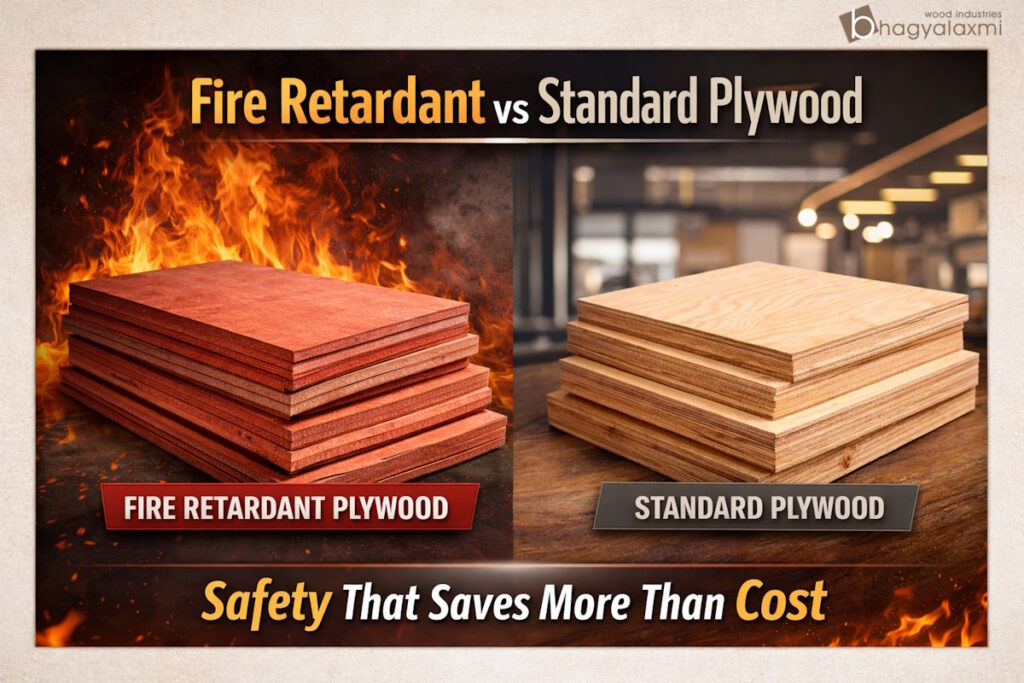
When designing or renovating commercial office spaces in India, safety should be a top priority.
One of the most critical decisions involves selecting the right type of plywood.
While standard plywood serves its purpose in various applications, fire retardant plywood offers an added layer of protection that can be crucial in an office setting.
Understanding the differences between these two types, including factors like fire retardant plywood price, is essential for making an informed choice. This article delves into the specifics, helping you navigate the complexities and make the best decision for your commercial space.
The choice between fire retardant and standard plywood has significant implications for both safety and compliance. Fire retardant plywood is engineered to resist the spread of flames, providing valuable time for evacuation and reducing potential damage. Standard plywood, while suitable for many applications, lacks this critical fire-resistant property. As you evaluate options, consider not just the initial cost but also the long-term benefits of enhanced safety and peace of mind.
Planning your office interior and unsure about fire-safe materials?
What is Fire Retardant Plywood?
Fire retardant plywood is specifically treated to slow down the spread of fire and reduce the emission of smoke and toxic gases. This is achieved through a manufacturing process that involves infusing the plywood with fire-retardant chemicals. These chemicals alter the wood’s natural flammability, making it more resistant to ignition and combustion.
Manufacturing Process and Chemicals Used
The treatment process typically involves either pressure impregnation or surface coating. Pressure impregnation forces fire-retardant chemicals deep into the wood fibers, providing more comprehensive protection. Surface coating involves applying a fire-retardant solution to the plywood’s surface. The specific chemicals used vary but often include compounds like ammonium phosphates or borates. These chemicals work by either releasing non-combustible gases when heated or by forming a char layer that insulates the wood from the flames. The quality of fire retardant plywood also hinges on adherence to ISI standards and rigorous testing.
Key Benefits of Using Fire Retardant Plywood in Commercial Spaces
The primary benefit is, of course, enhanced fire safety. However, the advantages extend beyond just slowing the spread of flames. Fire retardant plywood can also:
- Provide valuable time for evacuation
- Reduce the emission of harmful smoke and gases
- Help contain fire damage, protecting valuable assets
- Meet regulatory requirements for commercial buildings
These benefits make fire retardant plywood an excellent investment for any office environment. It’s important to factor in these long-term advantages when considering the fire retardant plywood price.
Standard Plywood: Understanding Its Limitations
Standard plywood, also known as commercial plywood, is manufactured without any fire-retardant treatment. It’s made by bonding layers of wood veneer together with adhesives, resulting in a strong and versatile building material. While suitable for many applications, standard plywood offers no inherent resistance to fire.
Common Applications of Standard Plywood
Standard plywood is a versatile material used in various applications:
- Furniture making
- Interior panelling
- Wall sheathing
- General construction
However, it is crucial to recognize its limitations when used in high-risk environments like commercial offices. Understanding where standard plywood fits best ensures you are making smart material choices.
Fire Safety Risks Associated with Standard Plywood
In a fire situation, standard plywood can quickly ignite and contribute to the rapid spread of flames. The burning process can also release significant amounts of smoke and toxic fumes, posing serious health risks. This makes standard plywood less desirable in spaces where fire safety is a critical concern.
Comparing Fire Retardant Plywood and Standard Plywood
Choosing between fire retardant plywood and standard plywood involves evaluating their performance characteristics, costs, and compliance with regulations.
Performance Characteristics: Fire Resistance and Durability
The most significant difference lies in their fire resistance. Fire retardant plywood is designed to withstand fire for a longer duration, providing crucial time for occupants to evacuate and for firefighters to respond. Standard plywood offers no such protection. In terms of durability, both types can be quite durable, but the lifespan of any plywood will depend on factors like the quality of the core and the type of adhesive used. Look into durable plywood options for any construction project to ensure longevity.
Cost Analysis: Fire Retardant Plywood Price vs. Standard Plywood Price
The fire retardant plywood price is typically higher than that of standard plywood due to the added manufacturing process and the cost of fire-retardant chemicals. However, the higher initial cost should be weighed against the potential savings from reduced fire damage, lower insurance premiums, and, most importantly, the enhanced safety of occupants. The long-term benefits can often justify the investment, especially in commercial spaces. When comparing, factor in the expected lifespan and maintenance requirements of both plywood types.
Compliance and Regulatory Standards in India
In India, building codes and fire safety regulations often mandate the use of fire-resistant materials in commercial buildings. Fire retardant plywood is specifically designed to meet these requirements. Always check for ISI certification and other relevant standards to ensure that the plywood complies with local regulations. This is critical for ensuring the safety of your office space and avoiding potential legal issues.
Still comparing fire retardant vs standard plywood for your project?
How to Choose the Right Plywood for Your Office
Selecting the right plywood involves considering several factors beyond just the fire retardant plywood price.
Assessing Your Specific Needs and Risks
Evaluate the specific needs of your office space. Consider:
- The building’s fire safety requirements
- The layout and occupancy of the office
- The types of activities that take place in the space
For instance, high-risk areas like server rooms or areas with flammable materials may warrant the use of fire retardant plywood, even if it is not strictly mandated. It is best to consider all the risks before making the final decision.
Evaluating Quality: How to Check Plywood Quality
To ensure you get high-quality plywood, consider the following:
- ISI Certification: Verify that the plywood meets Indian standards.
- Core Composition: Check the quality of the wood veneer and the uniformity of the core.
- Adhesive Strength: Ensure that the layers are securely bonded.
- Thickness and Tolerance: Ensure the plywood meets your project’s specifications.
Understanding how to check plywood quality is crucial to making an informed decision. Don’t base your decision solely on the fire retardant plywood price.
Installation and Maintenance Best Practices
Proper installation and maintenance are essential for maximizing the performance of any plywood. Follow the manufacturer’s recommendations for installation. Regularly inspect the plywood for any signs of damage or wear. Proper care will not only extend the plywood’s lifespan but also ensure it maintains its fire-retardant properties over time.
Avoiding Common Plywood Mistakes
Many common mistakes can compromise the effectiveness and safety of your plywood selection.
Overlooking Fire Safety Regulations
One of the biggest mistakes is failing to comply with local fire safety regulations. Always ensure that the plywood you choose meets the required standards. Ignoring these regulations can lead to serious consequences, including legal penalties and increased fire risks.
Choosing Plywood Based on Price Alone
While cost is a factor, prioritizing the fire retardant plywood price without considering quality or performance is a mistake. Investing in higher-quality fire retardant plywood can offer significant long-term benefits in terms of safety and durability.
Improper Installation and Maintenance
Incorrect installation or inadequate maintenance can reduce the effectiveness of fire retardant plywood. Follow installation guidelines and conduct regular inspections to ensure that the plywood remains in good condition.
Ready to make a safer choice for your office interiors?