
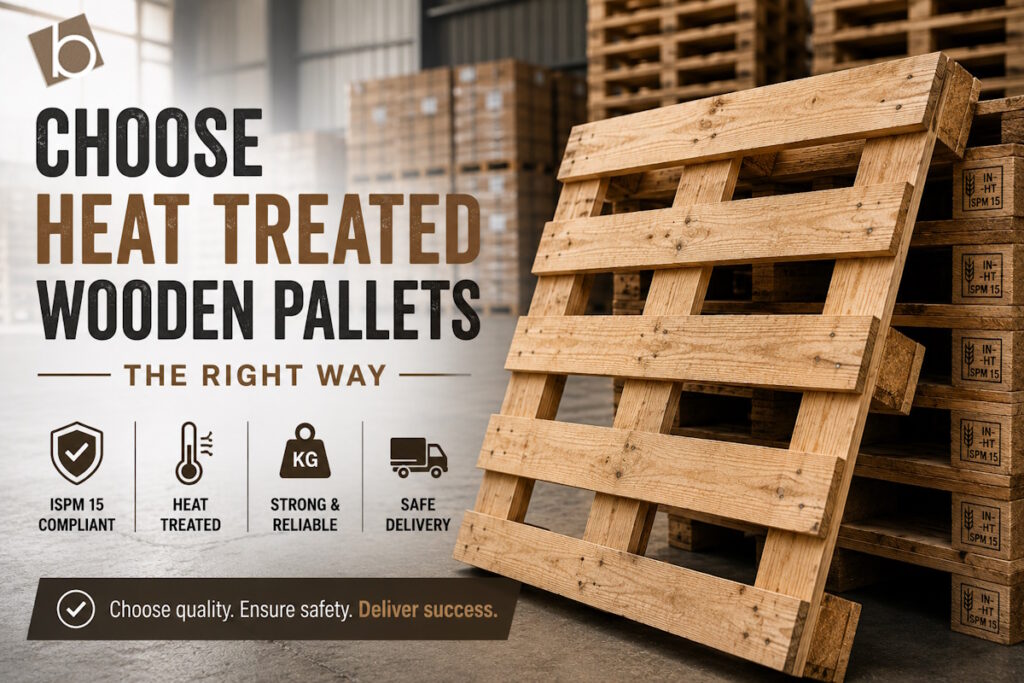
Wooden pallets play an important role in storage, shipping, and the movement of goods.
They are used by businesses in many industries, from food and retail to manufacturing and international trade.
When products need to be shipped across borders, choosing the right pallet becomes even more important.
This is where heat treated wooden pallets are commonly used. These pallets go through a controlled heating process that helps remove harmful insects and pests from the wood. This makes them suitable for international shipping when they meet the required standards.
However, buying heat treated pallets is not as simple as choosing the first supplier you find. The quality of the wood, pallet size, treatment process, certification, load capacity, and supplier experience can all affect your purchase.
A poor choice may lead to damaged products, rejected shipments, extra costs, or delays.
To help you make a better decision, here are 10 common mistakes you should avoid when buying heat treated wooden pallets.
Looking for reliable heat treated wooden pallets for your business?
1. Buying Pallets Without Checking the Heat Treatment Standard
One of the biggest mistakes buyers make is assuming that every heat treated pallet is suitable for international shipping.
For international transport, wooden packaging may need to follow ISPM 15 requirements. The heat treatment process is designed to reduce the risk of pests being carried from one country to another through wooden packaging.
Before placing an order, ask the supplier whether their heat treated wooden pallets meet the standards required for your destination country. You should also check whether the pallets have the proper marks or certification where required.
Do not depend only on a supplier saying that the pallets are “treated.” Ask what treatment standard they follow and whether they can provide the required documents.
This simple check can help prevent problems at customs and reduce the risk of your shipment being delayed or rejected.
2. Choosing the Wrong Pallet Size
Not every business needs the same pallet size. One of the most common buying mistakes is ordering pallets without checking the exact dimensions required for the products, warehouse equipment, containers, or transport system.
There are different types of wooden pallets, and their sizes can vary depending on the industry and country.
Before ordering, measure your products and confirm the required pallet length, width, height, entry points for forklifts, load capacity, and storage requirements.
A pallet that is too small may not support your products correctly. A pallet that is too large can waste space inside a truck, warehouse, or shipping container.
If standard sizes do not meet your needs, you can consider custom wood pallets designed according to your products and shipping process.
3. Focusing Only on Wooden Pallet Price
Price is important for every business, but choosing pallets only because they are cheap can cause bigger expenses later.
A very low wooden pallet price may sometimes mean lower-quality timber, weak construction, poor treatment, or limited quality checks. Cheap pallets that break during handling can damage products and increase replacement and transport costs.
Instead of comparing only the price per pallet, consider the total value you receive.
Check the quality of wood, construction method, heat treatment process, load capacity, expected life, delivery cost, and supplier support.
For example, paying slightly more for a strong pallet that can safely handle your products may be more cost-effective than buying a cheaper pallet that frequently breaks.
The goal should not always be to find the lowest wooden pallet price. It should be to find a reliable pallet at a fair price.
4. Ignoring the Load Capacity
A pallet may look strong but still not be suitable for the weight of your goods.
Every pallet has a certain load capacity based on its design, wood quality, thickness, and construction. Using a pallet that cannot handle the required weight creates a serious risk during storage and transportation.
Before buying heat treated wooden pallets, tell the supplier how much weight each pallet will carry.
You should also explain how the pallet will be used. A pallet placed on the floor may perform differently from one placed on warehouse racks. The weight can also behave differently when the pallet is being lifted or moved by a forklift.
A reliable wooden pallet manufacturer should be able to recommend a suitable design based on your load and handling requirements.
Never guess the required load capacity. Providing clear information to the manufacturer can help you select a safer and more suitable pallet.
5. Not Checking the Quality of the Wood
The quality of a wooden pallet depends heavily on the quality of the timber used to make it.
Poor-quality wood may have serious cracks, weak areas, damage, or other problems that can reduce pallet strength. This can become especially risky when the pallets are carrying heavy or valuable products.
When comparing suppliers, ask about the wood they use and their quality control process.
Different types of wooden pallets may use different wood materials depending on strength, budget, product type, and shipping needs.
You should also check whether the boards are properly fixed and whether the pallet has a clean and strong structure. Small natural marks in wood are normal, but major damage should not be ignored.
Working with an experienced wooden pallet manufacturer can make it easier to receive pallets with consistent quality.
Want help selecting the right pallet before placing your order?
6. Forgetting to Check the Heat Treatment Mark
When pallets are required to follow ISPM 15 for international shipping, the correct mark is an important part of compliance.
Some buyers order heat treated pallets but forget to confirm whether the required mark will be present on the finished pallets.
This can create problems when goods reach ports, customs points, or international inspection areas.
Before placing your order, ask the supplier what markings will appear on the pallet. Make sure the marking is clear and applied according to the relevant requirements.
You should also avoid suppliers who make unclear claims about certification or cannot explain their heat treatment process.
A professional supplier of heat treated wooden pallets should understand the requirements and be able to answer your questions clearly.
7. Ordering Standard Pallets When You Need Custom Pallets
Standard pallets are useful because they are widely available and usually cost less. However, they are not suitable for every product.
Large machines, unusual boxes, heavy parts, fragile products, and products with special shapes may require a different pallet design.
Trying to fit these products onto a standard pallet can create poor weight distribution and increase the risk of movement or damage during transport.
In such cases, custom wood pallets can be a better solution.
Custom pallets can be designed based on your product dimensions, weight, lifting method, storage system, and transportation needs.
A good wooden pallet manufacturer can study your requirements and recommend a design that provides better support.
Although custom wood pallets may have a different initial cost compared with standard pallets, they may help reduce product damage, wasted space, and handling problems.
8. Choosing a Supplier Without Checking Their Experience
Not every pallet supplier has the same level of knowledge or production ability.
A supplier may offer an attractive wooden pallet price but may not have enough experience with export pallets, heat treatment, custom designs, or large orders.
Before selecting a supplier, learn more about their experience.
Ask whether they regularly manufacture heat treated wooden pallets and whether they have supplied businesses with requirements similar to yours.
You can also ask about production capacity, quality checks, delivery times, customization options, and their process for dealing with damaged or incorrect pallets.
An experienced wooden pallet manufacturer should be able to explain the available options in simple terms and recommend a suitable pallet based on your needs.
Choosing a reliable supplier is especially important if pallets are a regular part of your shipping process.
9. Ignoring Delivery Time and Supply Capacity
Many buyers focus on pallet specifications and price but forget about delivery.
Imagine preparing a large shipment and discovering that your pallets will arrive several days late. Your products may be ready, but without pallets, loading and shipping can come to a stop.
Before confirming an order, ask the supplier about their normal production and delivery time.
For large orders, check whether the manufacturer has enough production capacity to meet your required quantity.
This becomes even more important when ordering custom wood pallets, as custom designs may require additional production time compared with standard models.
If your business regularly uses pallets, discuss repeat supply with your supplier. A manufacturer who can provide a steady supply may be more valuable than one offering a slightly lower price but unreliable delivery.
Do not evaluate wooden pallet price without also considering delivery reliability.
10. Not Explaining Your Exact Requirements to the Manufacturer
Many pallet problems start because the buyer does not provide enough information.
Simply asking a supplier for “wooden pallets” is not enough. There are many types of wooden pallets, and each one can be designed for a different purpose.
Before requesting a quote, prepare basic information about your needs.
Tell the wooden pallet manufacturer your required dimensions, product weight, quantity, destination country, storage method, forklift entry requirements, and whether the pallets will be used once or multiple times.
You should also mention whether the goods will be exported and whether heat treatment certification is required.
If your products have unusual dimensions or handling needs, ask about custom wood pallets.
The more information you provide, the easier it becomes for the manufacturer to recommend the correct pallet. Clear communication also helps you receive a more accurate quotation instead of facing unexpected costs later.
How to Choose the Right Heat Treated Wooden Pallets
Choosing the right pallet does not need to be difficult. Start by understanding how and where the pallet will be used.
For international shipments, check the heat treatment and marking requirements for the destination. Then determine the correct size and load capacity based on your products.
Compare several suppliers, but do not compare only the wooden pallet price. Look at quality, experience, production ability, customization, treatment standards, and delivery service.
If your products do not fit safely on standard pallets, speak with a manufacturer about custom wood pallets. A properly designed pallet can improve product support and make loading, storage, and transportation easier.
It is also useful to build a long-term relationship with a trusted wooden pallet manufacturer if your business needs pallets regularly. This can help maintain consistent specifications, quality, and availability for future orders.
Conclusion
Buying heat treated wooden pallets is an important decision, especially when your products are being shipped internationally. Choosing the wrong size, ignoring load capacity, buying only based on price, or failing to check heat treatment requirements can create unnecessary problems.
Take time to understand the different types of wooden pallets available and choose one that matches your products, transport method, and destination.
While wooden pallet price will always be an important part of the decision, quality and reliability should also be considered. A cheap pallet is not a good deal if it breaks, damages your products, or creates problems during shipping.
For products with special sizes, weights, or handling needs, custom wood pallets can provide better support than standard options.
Most importantly, work with a reliable wooden pallet manufacturer that understands your requirements and can provide consistent quality. Asking the right questions before placing an order can save money, reduce shipping problems, and help your goods reach their destination safely.
By avoiding these 10 common mistakes, you can make a smarter pallet purchase and choose heat treated wooden pallets that provide the right balance of strength, safety, cost, and performance for your business.
Ready to order standard or custom wood pallets for your business?