
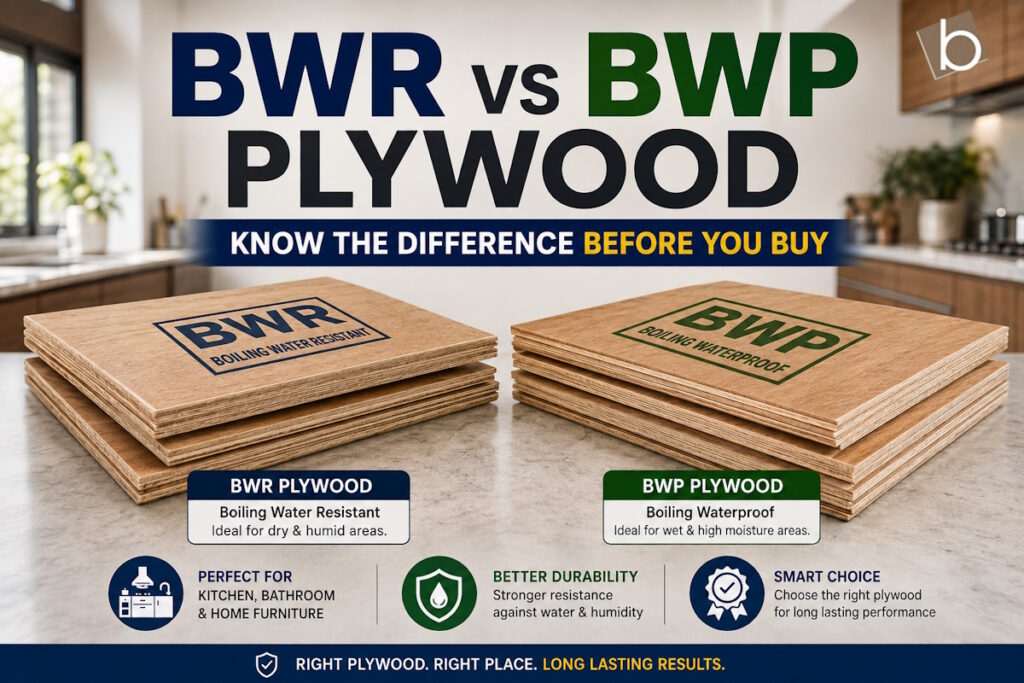
Choosing the right plywood can feel confusing, especially when you come across terms like BWR and BWP.
Both types of plywood are made to handle moisture, but they are not the same. They differ in strength, water resistance, price, and the places where they should be used.
If you are planning furniture for your home, office, kitchen, bathroom, or outdoor space, understanding the difference between BWR plywood and BWP plywood can help you avoid costly mistakes.
This detailed guide explains BWR plywood vs BWP plywood in simple English. It will help you understand their features, uses, benefits, limits, and prices. By the end of this article, you will know which type of plywood is suitable for your project.
Not sure whether BWR or BWP plywood is right for your project?
What Is Plywood?
Plywood is a board made by joining several thin layers of wood together. These thin wooden sheets are called veneers. They are placed in different directions and bonded with a strong adhesive.
This cross-layer design gives plywood better strength than normal wood. It also reduces bending, shrinking, and cracking.
Plywood is commonly used for:
- Beds
- Tables
- Chairs
- Wardrobes
- Kitchen cabinets
- Bathroom cabinets
- Doors
- Wall panels
- Office furniture
- Storage units
Different grades of plywood are made for different conditions. Some plywood is suitable only for dry indoor areas, while other types can handle moisture, water, heat, and heavy use.
BWR and BWP are two popular moisture-resistant grades.
What Is BWR Plywood?
BWR stands for Boiling Water Resistant.
BWR plywood is an exterior-grade plywood that can resist moisture and occasional contact with water. It is made using synthetic resin adhesives that provide better water resistance than regular interior plywood.
BWR plywood is stronger and more water-resistant than Moisture Resistant plywood, which is also known as MR plywood or commercial plywood.
However, BWR plywood is not fully waterproof. It can handle humidity, water splashes, and short periods of water contact, but it should not remain under water for a long time.
BWR plywood is commonly used in areas where there may be some moisture but no regular water exposure.
Common Uses of BWR Plywood
BWR plywood can be used for:
- Bedroom wardrobes
- Living room furniture
- Office furniture
- Dining tables
- Study tables
- Wall panels
- Doors
- Storage cabinets
- Shoe racks
- Furniture near windows
- Furniture in humid areas
- Kitchen furniture away from the sink
It is a useful choice for indoor furniture when you need better moisture protection without paying the higher cost of BWP plywood.
What Is BWP Plywood?
BWP stands for Boiling Waterproof.
BWP plywood is a higher-grade plywood designed to handle heavy moisture and regular water contact. It is often called marine-grade plywood because it offers a high level of water resistance.
The veneers in BWP plywood are bonded with strong waterproof resin. This helps the layers stay joined even when the plywood is exposed to water, steam, or humidity.
BWP plywood is commonly used in kitchens, bathrooms, utility areas, and other places where water exposure is frequent.
A good-quality BWP board can survive long boiling-water tests without the layers coming apart. However, the actual performance depends on the manufacturer, raw materials, adhesive quality, and production process.
Common Uses of BWP Plywood
BWP plywood is suitable for:
- Kitchen cabinets
- Cabinets under the kitchen sink
- Bathroom vanities
- Bathroom storage units
- Utility room furniture
- Outdoor furniture with proper protection
- Furniture in coastal areas
- Furniture near water tanks
- Laboratory furniture
- Restaurant kitchens
- Wash area cabinets
- Boat interiors, depending on the product grade
- Areas with high humidity
People often choose marine plywood for kitchen cabinets because kitchens face water splashes, steam, heat, oil, and frequent cleaning.
BWR Plywood vs BWP Plywood: Main Difference
The main difference between BWR and BWP plywood is their level of water resistance.
BWR plywood is resistant to water, while BWP plywood is designed to offer stronger protection against water.
BWR plywood is suitable for areas with occasional moisture. BWP plywood is better for areas with regular or heavy water exposure.
Here is a simple comparison:
| Feature | BWR Plywood | BWP Plywood |
|---|---|---|
| Full form | Boiling Water Resistant | Boiling Waterproof |
| Water resistance | Good | Very high |
| Best for | Moist indoor areas | Wet and highly humid areas |
| Kitchen use | Suitable for dry sections | Best for sink and wet sections |
| Bathroom use | Limited | Recommended |
| Outdoor use | Limited | Better with surface protection |
| Price | Lower | Higher |
| Durability | Good | Very good |
| Adhesive strength | Strong | Stronger waterproof bonding |
| Risk of layer separation | Higher under long water exposure | Lower with genuine quality plywood |
This table gives a quick idea, but several other points should be considered before making a purchase.
1. Water Resistance
Water resistance is the most important factor in the BWR plywood vs BWP plywood comparison.
BWR plywood can handle moisture, humidity, and accidental water splashes. It may also resist short-term exposure to water. However, repeated or long contact with water can damage it over time.
BWP plywood is designed for tougher conditions. It can handle regular water splashes, steam, dampness, and high humidity much better.
For example, a bedroom wardrobe may face some humidity during the rainy season. BWR plywood can work well in such a situation.
A cabinet under the kitchen sink may face pipe leaks, spills, and daily moisture. BWP plywood is the safer option for that location.
Keep in mind that no wooden board should be left in standing water for a long period. Even waterproof plywood needs proper edge sealing, surface finishing, and installation.
2. Adhesive Quality
The adhesive used between the wood layers affects the strength and water resistance of plywood.
BWR plywood uses water-resistant synthetic resin. This provides good protection against moisture and short water exposure.
BWP plywood uses a stronger waterproof bonding resin. It is made to prevent the layers from separating in wet conditions.
The term used for layer separation is delamination. When low-quality plywood absorbs water, its layers may become loose and start peeling. Genuine BWP plywood has a much lower risk of delamination when used correctly.
Still, not every product sold as BWP plywood has the same quality. It is important to buy from a trusted brand and check the product details.
3. Strength and Durability
Both BWR and BWP plywood can be strong, but BWP plywood usually performs better in difficult conditions.
BWR plywood offers good strength for normal indoor furniture. It can be used for wardrobes, beds, shelves, tables, and cabinets that do not face regular water contact.
BWP plywood is a better choice when the furniture may face moisture for many years. Its stronger bonding helps it remain stable in kitchens, bathrooms, and utility areas.
The strength of plywood also depends on:
- Type of wood used
- Number of veneer layers
- Thickness of the board
- Quality of the core
- Presence of gaps inside the board
- Adhesive quality
- Manufacturing process
- Storage conditions
- Installation quality
A poorly made BWP board may perform worse than high quality plywood from a reliable BWR range. Grade is important, but overall manufacturing quality is equally important.
4. Price Difference
BWP plywood is usually more expensive than BWR plywood.
The higher price comes from its stronger waterproof bonding, better raw materials, stricter manufacturing process, and improved performance in wet conditions.
BWR plywood is a more budget-friendly choice for furniture that does not require full water protection.
However, buying the cheapest plywood may not save money in the long run. If you use BWR plywood under a leaking sink and it gets damaged, you may have to replace the entire cabinet.
A smart buyer should select plywood based on the location instead of using the same grade everywhere.
For example, you can use BWP plywood for the wet parts of a kitchen and BWR plywood for dry storage areas. This approach can give you good protection without making the whole project too expensive.
5. Kitchen Use
The kitchen is one of the most demanding areas in a home. Kitchen furniture faces water, steam, heat, oil, food stains, and cleaning chemicals.
BWR plywood can be used in dry parts of the kitchen, such as:
- Upper cabinets away from the sink
- Tall pantry units
- Crockery cabinets
- Dry storage shelves
- Cabinets far from the cooking and washing zones
BWP plywood should be used in high-risk areas, including:
- Cabinet under the sink
- Cabinets near the dishwasher
- Units close to water pipes
- Cabinets near wet preparation areas
- Base cabinets that are cleaned frequently
- Furniture near damp walls
Using marine plywood for kitchen cabinets can provide better safety against water damage. It is especially useful in the sink area, where small leaks may remain unnoticed for several days.
For the best result, the plywood edges should be sealed properly. Laminate, veneer, paint, edge bands, and waterproof sealants can help reduce water entry.
Need plywood for your kitchen, bathroom, or another moisture-prone area?
6. Bathroom Use
Bathrooms have high humidity and regular water exposure. BWR plywood is generally not the best choice for areas close to showers, wash basins, or wet floors.
BWP plywood is more suitable for:
- Vanity units
- Under-basin cabinets
- Mirror cabinets
- Bathroom shelves
- Storage units
- Cabinets near wet areas
Even when using BWP plywood, the carpenter should protect all cut edges. Water often enters plywood through unsealed edges, screw holes, and joints.
Good ventilation is also important. An exhaust fan or window can reduce humidity and help bathroom furniture last longer.
7. Outdoor Use
BWP plywood is better than BWR plywood for outdoor use, but it should not be left completely unprotected.
Sunlight, rain, heat, insects, and temperature changes can damage plywood over time. Outdoor plywood should have a suitable coating, paint, polish, laminate, or weather-resistant finish.
BWR plywood may be used in semi-covered outdoor areas where direct rain is unlikely.
BWP plywood is better for areas such as:
- Covered balconies
- Semi-open utility areas
- Outdoor storage under a roof
- Garden furniture with protective coating
- Covered entrance furniture
For furniture that will face direct rain throughout the year, other materials may be more suitable. You may need treated wood, exterior boards, metal, plastic, or specially made outdoor panels.
8. Resistance to Termites and Borer
Water resistance and termite resistance are not the same thing.
BWP plywood may resist water, but that does not automatically mean it is fully termite-proof. Some manufacturers treat plywood with chemicals to improve protection against termites and wood-boring insects.
Always check whether the product clearly mentions termite and borer resistance.
You should also inspect the installation area. If the wall or floor already has a termite problem, even high-quality boards may become damaged.
Termite treatment before furniture installation can provide extra protection.
9. Weight and Handling
BWP plywood may feel heavier than some BWR boards because it often has a denser core and stronger construction. However, weight alone is not proof of quality.
A heavy board can still have poor bonding or internal defects. A lighter board is not always weak.
Carpenters should consider board weight during transport, cutting, lifting, and installation. Heavy kitchen shutters may also need better hinges and fittings.
10. Surface Finish
Both BWR and BWP plywood can be covered with:
- Laminate
- Natural veneer
- Paint
- Polish
- Acrylic sheets
- PVC sheets
- Decorative panels
The final look depends on the surface quality of the plywood and the skill of the carpenter.
A smooth and even board gives a better finish. Before applying laminate or veneer, check the plywood for bends, cracks, core gaps, bubbles, and uneven thickness.
Is BWP Plywood Completely Waterproof?
BWP plywood is often sold as waterproof plywood, but it is important to understand what this means.
The adhesive bond inside the plywood is designed to resist water. This reduces the chance of the layers separating.
However, the wood layers can still absorb some moisture, especially through open edges, cuts, holes, and damaged surfaces.
BWP plywood can also become weak if:
- It stays in standing water for a very long time
- The edges are not sealed
- The surface coating is damaged
- The product is low quality
- The plywood is stored incorrectly
- The installation area has constant leakage
- The board is exposed to sun and rain without protection
Therefore, BWP plywood should be seen as highly water-resistant plywood with strong waterproof bonding. Proper finishing and maintenance are still needed.
Which Plywood Is Better for Home Furniture?
The right plywood depends on where the furniture will be placed.
Choose BWR Plywood For:
- Bedroom wardrobes
- Beds
- Dressing tables
- Study tables
- Living room cabinets
- Bookshelves
- Office desks
- TV units
- Dining room furniture
- Dry storage areas
BWR plywood offers a good balance of price, strength, and moisture resistance for these uses.
Choose BWP Plywood For:
- Kitchen base cabinets
- Sink cabinets
- Bathroom vanities
- Utility cabinets
- Furniture near water pipes
- Furniture in coastal areas
- Furniture against damp walls
- Semi-outdoor furniture
- Areas with regular water exposure
BWP plywood costs more, but it provides better protection in wet areas.
Can You Use BWR Plywood in the Kitchen?
Yes, BWR plywood can be used in some parts of the kitchen.
It can work well for upper cabinets, dry pantry units, and storage areas that are away from the sink and water lines.
However, using BWR plywood for the cabinet below the sink is risky. Even a small pipe leak can damage the board if the problem is not fixed quickly.
For better safety, use marine plywood for kitchen wet zones and BWR plywood for dry zones.
This mixed approach is common in budget-controlled projects.
Can You Use BWP Plywood for All Furniture?
Yes, BWP plywood can be used for almost all home furniture. It offers good strength and high water resistance.
However, it may not always be necessary.
Using expensive BWP plywood for a bookshelf in a dry bedroom may increase the total project cost without providing a major benefit.
A better plan is to match the plywood grade with the risk level of each area.
Use BWP where water exposure is likely. Use BWR in dry and moderately humid spaces.
Plywood Buying Guide
A good plywood buying guide should not focus only on the BWR or BWP label. You should check the complete quality of the product.
Here are the main things to inspect before buying plywood.
1. Check the Grade
Confirm whether the plywood is BWR or BWP. Read the product label, invoice, brochure, and technical details.
Do not depend only on the seller’s spoken promise.
2. Buy From a Trusted Manufacturer
Choose a known and reliable manufacturer. Trusted brands are more likely to follow proper quality checks and provide clear product information.
A brand name alone does not guarantee quality, but it reduces the risk of buying a wrongly labelled board.
3. Look for Certification
Check whether the plywood follows the required quality standard in your country. Certification can help confirm that the product has passed certain tests.
Read the printed mark carefully and verify it when possible.
4. Check the Core
Look at the side of the plywood sheet. The core should appear solid and even.
Avoid boards with:
- Large gaps
- Overlapping layers
- Loose veneers
- Visible cracks
- Uneven thickness
- Damaged edges
Core gaps can reduce strength and create problems during cutting and screw fixing.
5. Check the Thickness
Plywood is sold in different thicknesses. Common options include 6 mm, 9 mm, 12 mm, 16 mm, 18 mm, and 25 mm.
The correct thickness depends on the furniture design and load.
For example, shelves that carry heavy items need enough thickness and proper support. Thin plywood may bend if the span is too wide.
6. Inspect the Surface
The surface should be smooth, flat, and free from major defects.
Check for:
- Bubbles
- Cracks
- Bends
- Patches
- Open knots
- Uneven areas
- Signs of moisture damage
A better surface makes finishing easier.
7. Tap the Board
You can gently tap different parts of the plywood. A clear and even sound may suggest a solid core. A hollow sound may point to internal gaps.
This is only a basic check. It cannot replace proper factory testing.
8. Ask About Warranty
Some manufacturers offer a warranty against delamination, termites, or manufacturing defects.
Read the warranty conditions carefully. Check what is covered, how long it lasts, and what documents are required for a claim.
9. Compare the Total Cost
Do not compare only the price per sheet.
Also consider:
- Expected life
- Water exposure
- Repair cost
- Replacement cost
- Carpenter charges
- Surface finishing cost
- Warranty support
Paying slightly more for high quality plywood can be better than replacing damaged furniture after a few years.
10. Keep the Invoice
Always ask for a proper bill. The invoice should mention the brand, product name, grade, thickness, sheet size, quantity, and price.
The bill may be required for warranty claims.
Common Mistakes to Avoid
Many plywood problems happen because of poor product selection or bad installation.
1. Choosing Only by Price
The cheapest board may have internal gaps, weak bonding, or poor-quality veneers. Low price should not be the only reason for buying plywood.
2. Using BWR in Constantly Wet Areas
BWR plywood is water-resistant, not fully waterproof. It should not be used under sinks, near showers, or in places with regular leakage.
3. Ignoring Edge Sealing
Cut edges absorb moisture faster than finished surfaces. Every exposed edge should be sealed properly.
4. Buying Without Checking the Grade
Some sellers may use words like marine, waterproof, or premium without giving proper product details. Always verify the grade and certification.
5. Ignoring Plumbing Problems
Even BWP plywood should not be used as a solution for leaking pipes. Fix all plumbing issues before installing cabinets.
6. Using Poor Hardware
Good plywood needs good hardware. Weak hinges, screws, channels, and fittings can reduce the life of the furniture.
7. Skipping Ventilation
Kitchens and bathrooms need proper airflow. Constant trapped moisture can damage furniture, walls, fittings, and finishes.
BWR Plywood vs BWP Plywood: Which One Offers Better Value?
The answer depends on your project.
BWR plywood offers better value for dry indoor furniture. It provides good moisture resistance at a more affordable price.
BWP plywood offers better value for wet and humid areas. It costs more, but it can reduce the risk of swelling, peeling, and layer separation.
The most practical choice is not always to buy the most expensive plywood. The better choice is to use the right grade in the right location.
For example:
- Use BWR plywood for bedroom wardrobes.
- Use BWR plywood for living room furniture.
- Use BWP plywood below the kitchen sink.
- Use BWP plywood for bathroom cabinets.
- Use BWP plywood for utility areas.
- Use BWR plywood for dry kitchen cabinets if the budget is limited.
This method controls cost while giving important areas better protection.
How to Make Plywood Furniture Last Longer
Whether you choose BWR or BWP plywood, proper care can increase the life of your furniture.
Follow these simple steps:
- Repair water leaks quickly.
- Keep the edges sealed.
- Use good-quality laminate or paint.
- Avoid leaving wet cloths on furniture.
- Do not allow water to collect inside cabinets.
- Keep bathroom and kitchen spaces ventilated.
- Clean spills as soon as possible.
- Use suitable hinges and screws.
- Keep furniture away from untreated damp walls.
- Inspect plumbing lines from time to time.
- Avoid direct outdoor exposure unless the board is properly protected.
- Treat termite problems before installation.
Good maintenance is just as important as choosing the correct plywood grade.
Conclusion
When comparing BWR plywood vs BWP plywood, BWP plywood offers stronger protection against water, moisture, and humidity. It is the better choice for kitchens, bathrooms, utility spaces, sink cabinets, and other wet areas.
BWR plywood is a practical and affordable choice for bedrooms, living rooms, offices, wardrobes, tables, shelves, and dry storage units. It can handle normal humidity and occasional moisture, but it should not be used where water contact is frequent.
Choose BWR plywood when:
- The area is mostly dry.
- Water exposure is low.
- You need good moisture resistance.
- You want to control the project budget.
Choose BWP plywood when:
- The area faces regular moisture.
- Water splashes are common.
- The furniture is near plumbing lines.
- You need marine plywood for kitchen or bathroom use.
- Long-term water resistance is important.
No matter which grade you select, always buy high quality plywood from a trusted manufacturer. Check the core, thickness, surface, certification, warranty, and invoice before making your final decision.
A careful choice can protect your furniture, reduce repair costs, and give you better value for many years. Use this plywood buying guide to compare products properly, and do not assume that every board sold as waterproof plywood will offer the same level of performance.
The best plywood is not simply the most expensive one. It is the plywood that matches the location, moisture level, furniture design, and budget of your project.
Ready to choose the right plywood for your project?your kitchen project?